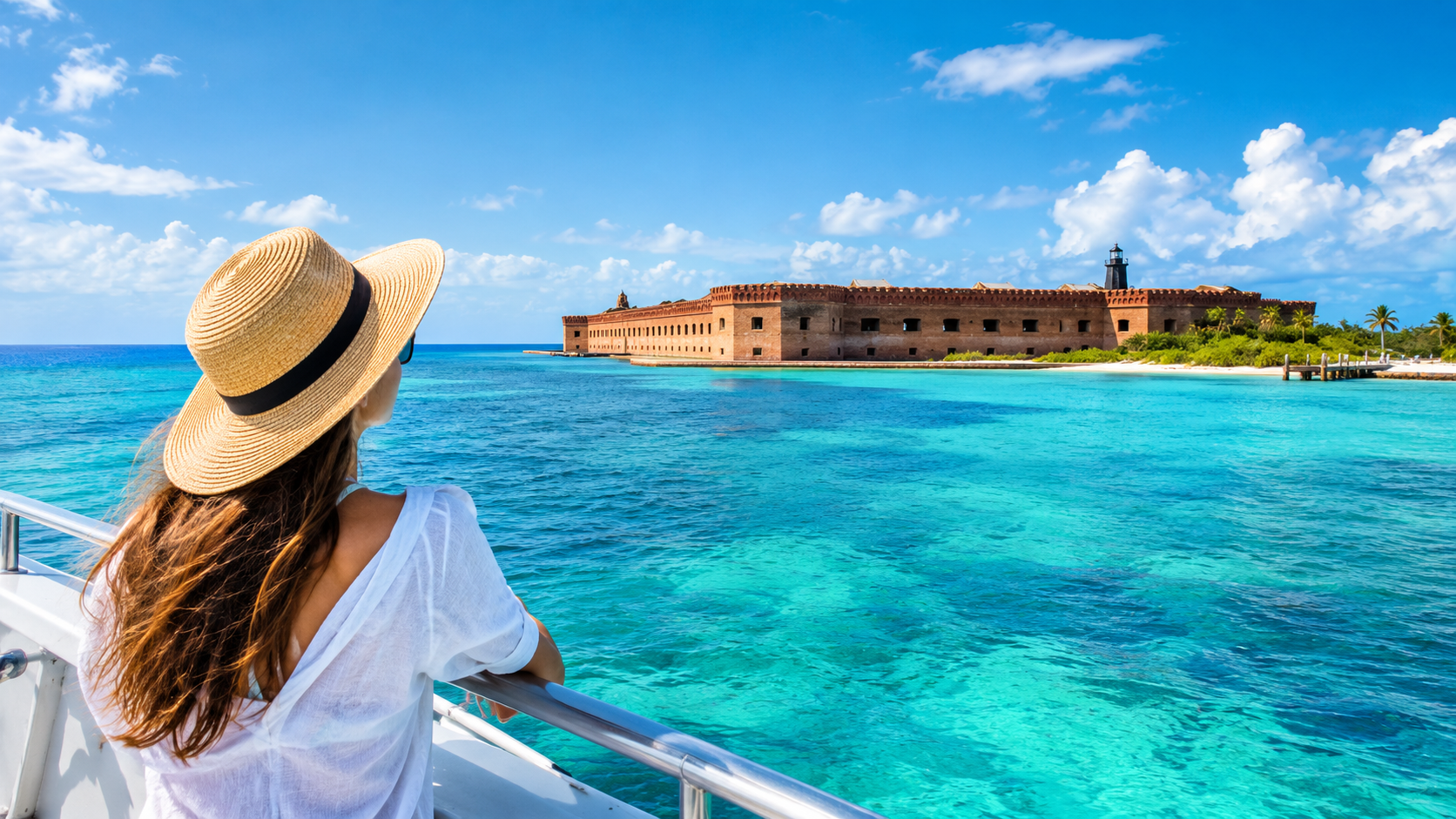
Seventy miles west of Key West, past the last stretch of open Gulf water where the color shifts from turquoise to something closer to sapphire, sits one of the strangest and most beautiful places in the National Park System. Dry Tortugas National Park is almost entirely water — a scatter of seven small islands anchored by a 19th-century brick fortress that once guarded the shipping lanes into the Gulf of Mexico. There's no bridge out here, no ferry from the mainland, no way in at all except by boat or seaplane. That isolation is exactly why it's worth the trip.
If you're already planning key west tours as part of a Florida itinerary, Dry Tortugas deserves its own separate day. It's not a quick add-on — it's a full-day (or overnight, if you camp) commitment that rewards travelers with some of the clearest water and best snorkeling in the continental United States, plus a fort that looks like it was airlifted in from a different century.
Why Dry Tortugas Is Worth the Trip From Key West
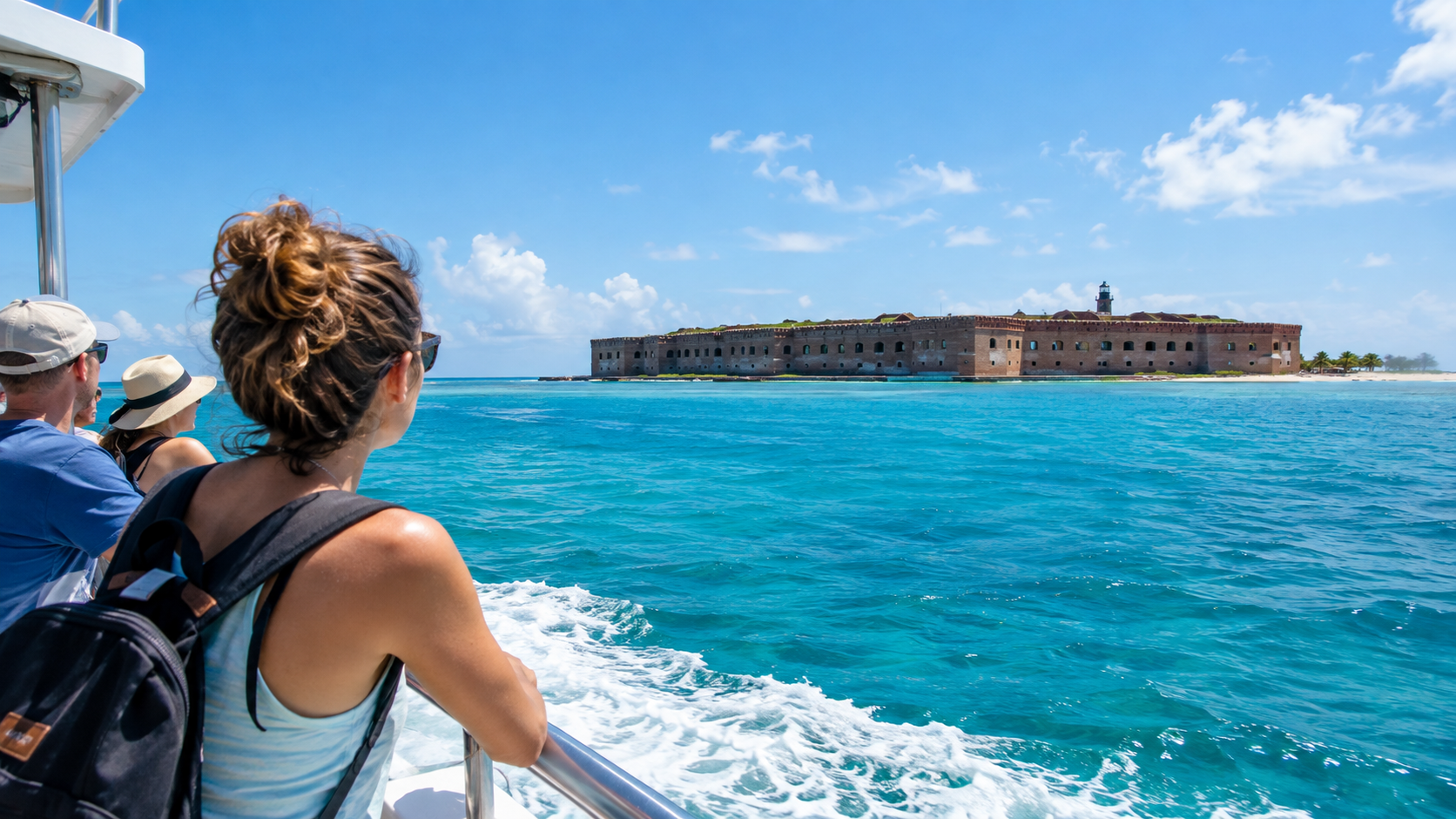
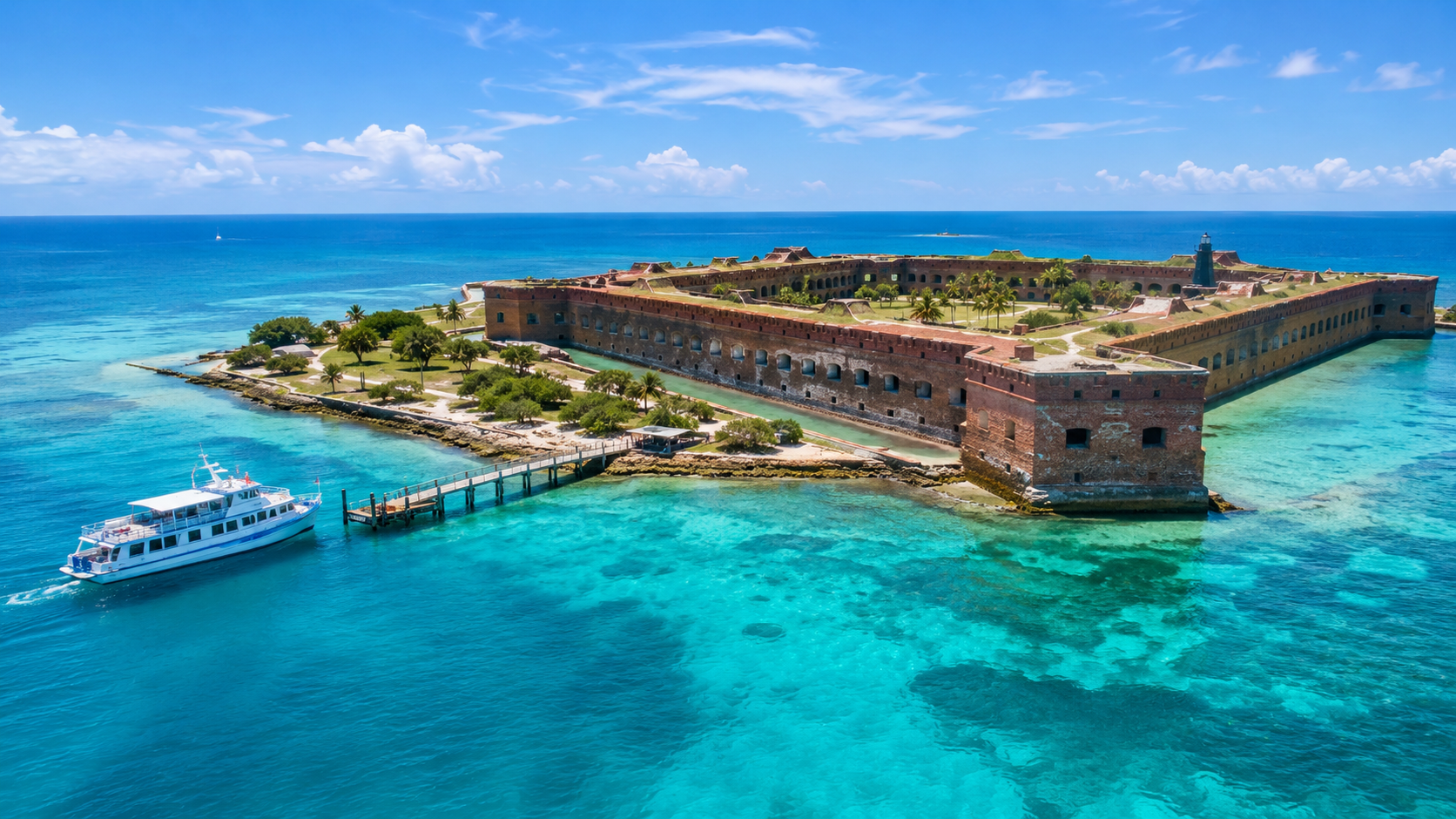
Fort Jefferson dominates Garden Key, the main island most visitors reach. Construction started in 1846 and never really finished — it's the largest all-masonry fort in the Americas, built with over 16 million bricks, and it was designed to hold 1,500 soldiers and 450 guns. It never fired a shot in anger. Instead it became a Union prison during the Civil War, most famously holding Dr. Samuel Mudd, who was convicted of helping John Wilkes Booth after the Lincoln assassination.
Walking the fort's moat wall, with brown pelicans diving into water so clear you can see the coral heads twenty feet down, is unlike anything else in Florida. Add in the fact that Dry Tortugas is one of the least-visited national parks in the country — fewer people see it in a year than pass through Everglades National Park in a busy month — and you've got a genuinely rare experience.
The Snorkeling
The water around Garden Key and neighboring Bush Key is shallow, warm, and protected, which makes it forgiving for beginners while still exciting for experienced snorkelers. Expect to see parrotfish, barracuda, sergeant majors, and the occasional nurse shark cruising the moat wall. Coral cover has taken hits from bleaching events over the past decade, but there are still healthy patches, especially around the pilings near the coaling station ruins. Most day-trip boats include snorkel gear, and the water rarely drops below chest-deep for long stretches, so you can wade out and start exploring without much fuss.
How to Get There: Ferry vs. Seaplane
There are exactly two ways to reach the Dry Tortugas, and both start from Key West.
- The Yankee Freedom ferry: This is the classic option and the one most Key West tours to Dry Tortugas are built around. The high-speed catamaran takes about 2.5 hours each way, departs early (usually around 7 or 8 a.m.), and includes breakfast, lunch, snorkel gear, and a guided tour of Fort Jefferson. You get roughly four hours on the island itself. Round-trip runs about $200 per adult, which sounds steep until you realize it includes the boat, the meals, the gear, and the only National Park Service ranger tour most people will ever take by sea.
- Seaplane charters: Faster and pricier, seaplane trips cut the travel time to about 40 minutes each way, which means more time on the island or the option to do a half-day trip. Flying in over the fort and the surrounding reef is a genuinely spectacular way to arrive — the water below shifts through a dozen shades of blue before you even land. Expect to pay significantly more than the ferry, generally in the $400-$700 range depending on trip length.
Private and small-group boat charters also run out of Key West Bight for travelers who want more flexibility than the standard ferry schedule, though these tend to cost more and are worth booking well ahead during winter and spring.
Camping Overnight
For a different kind of trip, the ferry allows a limited number of campers to stay overnight on Garden Key. There's no running water, no food service, and no electricity — you bring everything in and pack everything out — but sleeping under a sky with almost zero light pollution, with the fort walls glowing faintly in the moonlight, is the kind of thing people talk about for years. Camping permits are limited and need to be reserved through the ferry operator well in advance, especially for winter dates.
Planning From Miami or Fort Lauderdale
A lot of visitors don't realize how far Key West actually is from South Florida's bigger cities, which matters when you're stacking Dry Tortugas onto a broader trip. Driving from Miami down the Overseas Highway takes about 3.5 to 4 hours each way; from Fort Lauderdale, tack on another 45 minutes. That's why most people looking for key west tours from miami or key west tours from fort lauderdale either commit to an overnight in Key West or book a multi-day Florida Keys itinerary rather than trying to do it all in a single day.
The smartest approach for most travelers: spend a night or two in Key West, use one full day for the Dry Tortugas ferry or seaplane, and fill the rest of your visit with the town's other highlights — sunset at Mallory Square, a stroll down Duval Street, the Hemingway House, or a snorkeling trip out to the reef closer to shore. Trying to squeeze Dry Tortugas into a single day-trip from Miami is technically possible if you drive down the night before, but it makes for a very long, very early morning.
Other Things to Do in Key West Before or After
Dry Tortugas will likely be the centerpiece of your Key West visit, but the town itself earns a few days on its own. Some of the best things to do in key west pair naturally with a Dry Tortugas trip:
- Sunset sail out of Key West Bight — a low-key way to unwind after a long day on the water, with the added bonus of catching Key West's famous sunset celebration from the deck instead of the crowded dock.
- Snorkeling trips to the reef at Western Sambo or Looe Key, which give you a closer, shorter alternative if a full Dry Tortugas day doesn't fit your schedule.
- A stroll through Old Town — the Hemingway House, the Southernmost Point buoy, and the six-toed cats that still roam the property make for an easy half-day.
- Kayaking the backcountry mangroves around Key West for a quieter, wildlife-heavy contrast to the open-water fort trip.
What to Pack
There's no shade to speak of once you're off the ferry and out on the water, and no shop to buy sunscreen once you're there. Pack reef-safe sunscreen, a hat, a rash guard if you burn easily, and a reusable water bottle — most operators offer refill stations onboard. Bring cash for tips (crew members work hard for both breakfast service and gear setup), and if you're prone to seasickness, take medication before boarding rather than after; the open water crossing can get choppy, especially in winter when cold fronts push through the Gulf.
Best Time to Go
Winter and early spring — December through April — bring calmer seas, lower humidity, and better visibility for snorkeling, though it's also peak tourist season in Key West, so book your ferry or seaplane seat at least a few weeks out. Summer trips deal with more afternoon thunderstorms and choppier crossings but reward visitors with warmer water and fewer crowds on the island itself. Hurricane season runs June through November, so keep an eye on the forecast if you're booking a trip during those months.
Final Thoughts
Dry Tortugas isn't a place you stumble into — it takes planning, a full day, and a willingness to spend hours on open water to get there. That effort is exactly why it stays so untouched. Whether you book through the Yankee Freedom, splurge on a seaplane, or arrange a private charter through a Florida tour operator, the fort, the reef, and the sheer emptiness of the surrounding sea make it one of the most memorable day trips in the entire state. Pair it with a couple of relaxed days in Key West, and you've got a Florida Keys trip that goes well beyond the usual sunset cruise and beach bar circuit.
Watch: 3 Key West streets locals love (not Mallory)
Frequently Asked Questions
How do you get from Key West to Dry Tortugas National Park?
Most visitors take the Yankee Freedom ferry, a 2.5-hour high-speed catamaran ride each way departing from the Historic Seaport, or fly via seaplane with Key West Seaplane Adventures, which takes about 40 minutes each way. Private charters and personal boats are also options if you have a permit and your own vessel.
How much does a Dry Tortugas tour cost?
The Yankee Freedom full-day ferry trip runs about $200-$230 per adult and includes breakfast, lunch, snorkel gear, and a guided fort tour. Seaplane trips are pricier, ranging from roughly $425 for a half-day to $795 for a full day per person, but save travel time and offer aerial views.
What is the best time of year to visit Dry Tortugas?
The dry season from November through April offers calmer seas, better visibility, and cooler temperatures, making it the most popular and comfortable time to visit. Summer months can bring choppier water and afternoon storms, though fewer crowds.
Do I need to book in advance for a Dry Tortugas tour?
Yes, especially for the Yankee Freedom ferry, which has limited daily capacity (around 250 passengers) and often sells out weeks ahead during peak season (December-April). Booking 2-4 weeks in advance is recommended, and seaplane tours should be reserved even earlier since they carry only a handful of passengers per flight.
Can you camp overnight at Dry Tortugas National Park?
Yes, primitive camping is allowed at the campground near Fort Jefferson for $15 per night per site, booked through Recreation.gov, and you'll need to bring all your own food, water, and gear since there are no services on the island. The ferry can transport overnight campers for an additional round-trip fee of about $215.